How Long a New Filling Should Stay Sensitive, and the Signs It Is Not Settling
31 July 2026
When the Dentist’s Injection Does Not Work
22 August 2026
Can a Night Guard Change Your Bite?
If you have started wearing a splint at night and something feels different when you wake up, you are asking a fair question: can a night guard change your bite? The honest answer is that it can, that most of the time the change is temporary and harmless, and that in a small number of cases it is neither.
That distinction is the whole article, and it is oddly hard to find online. Search the question and much of the first page belongs to companies that manufacture and sell night guards directly to the public. They are not lying to you, but they have an obvious reason to keep the risk in small print. What follows is closer to what you would hear in a surgery.
Why Your Bite Feels Strange First Thing in the Morning
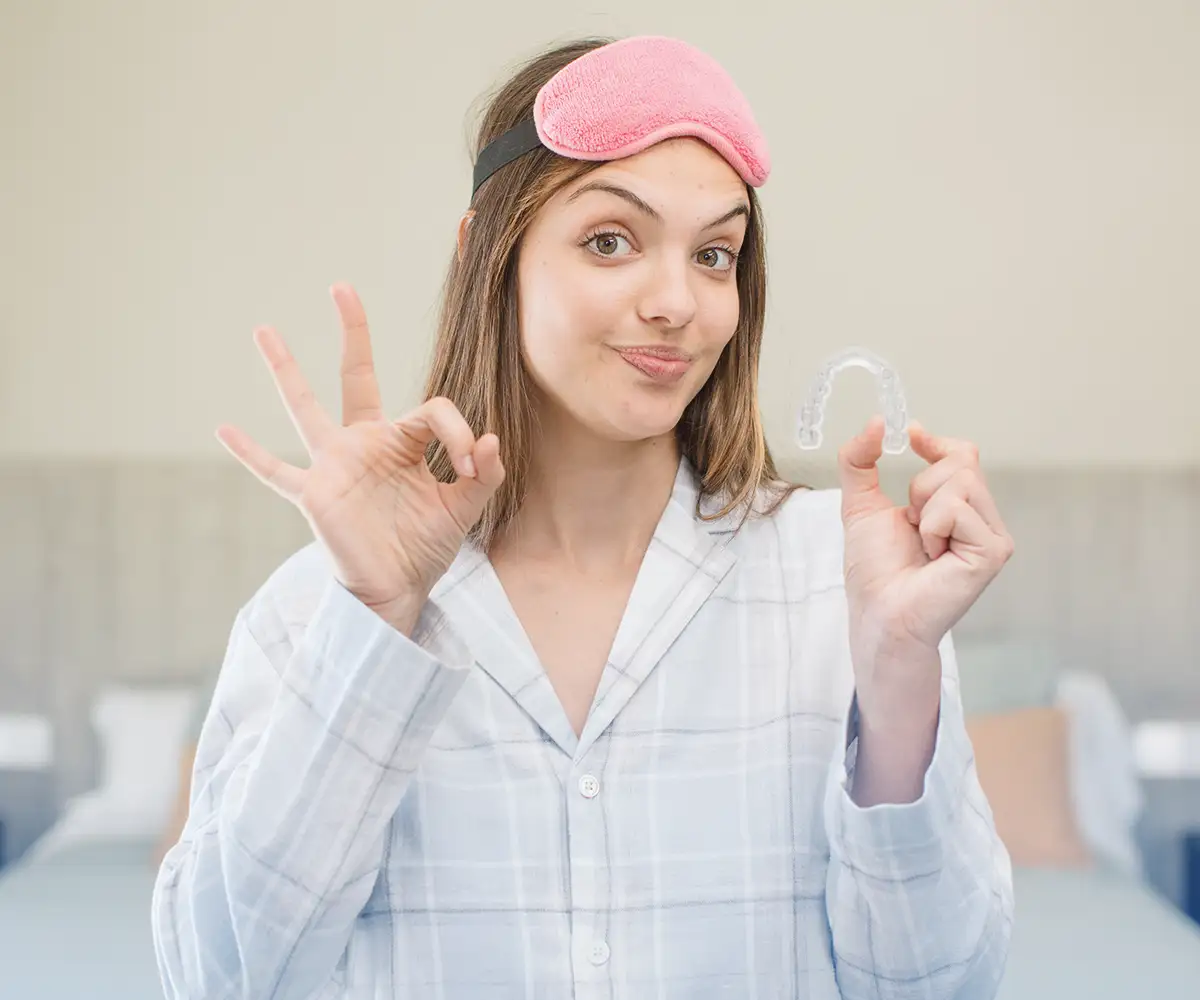
Most mornings, the odd sensation is not really your bite. It is proprioception, the sense that tells your jaw where your teeth are meeting. Spend seven or eight hours with a few millimetres of acrylic between your arches and that sense is briefly recalibrated. Take the guard out and your teeth meet in a way your brain reads as wrong.
The Version That Settles by Breakfast
This settles quickly. Chew for a minute or two, eat breakfast, and it passes. If your bite feels normal again within a few minutes of the guard coming out, and it behaves the same way every morning without getting worse, you are describing ordinary adaptation rather than a problem.
When a Change Is Not Really a Change
So when someone asks can a night guard change your bite for an hour each morning, the answer is that this is not really a change at all. It is your own sense of position resetting. The finding that deserves attention is different in shape: a bite that still does not meet the way it used to several hours later, or one that shifts gradually across weeks, so the difference is obvious on a Tuesday afternoon rather than only at seven in the morning.
How a Night Guard Can Genuinely Move Teeth
Here is the mechanism that almost no consumer page explains. Teeth are not set in bone like posts in concrete. They continue to erupt very slowly throughout life, and they stop where they meet resistance, which is normally the opposing tooth.
Covered Teeth Stop, Uncovered Teeth Carry On
Cover some of your teeth and leave others uncovered, and you have created two different situations in one mouth. The covered teeth are held down against plastic. The uncovered teeth have nothing to meet, so they carry on erupting. Repeat that nightly for months and the arch quietly reorganises itself. The classic outcome is an anterior open bite, where the back teeth meet but the front teeth no longer touch at all.
This is the version of can a night guard change your bite that actually matters, because an anterior open bite does not reverse itself when you stop wearing the appliance. It is not theoretical either. Unintended occlusal changes following the provision of night guards have been described in the dental literature, including in the British Dental Journal, and inadequate occlusal coverage is the recurring theme. The appliances most often involved are those designed to cover only part of the arch, together with poorly fitting devices that sit off the back teeth.
The Coverage Check You Can Do Tonight
Full occlusal coverage is therefore the single most useful thing to check. A splint meant for regular nightly wear should contact every tooth in the arch, right back to the last molar. Where occlusal coverage stops short, the teeth beyond it are free to drift, and an anterior open bite is the most visible way that shows up.
Hard, Soft, and the Guard That May Invite More Clenching
Appliances do not all behave the same way. A custom night guard in hard acrylic, made from a scan or impression of your own teeth, spreads contact across the arch and can be adjusted chairside when a high spot appears. A soft night guard is more comfortable on the first night, which is part of why it sells well, but it compresses under load, and there is a long running argument in dentistry that a chewy surface encourages some people to clench into it rather than relax against it.
Why Adjustability Matters More Than Comfort
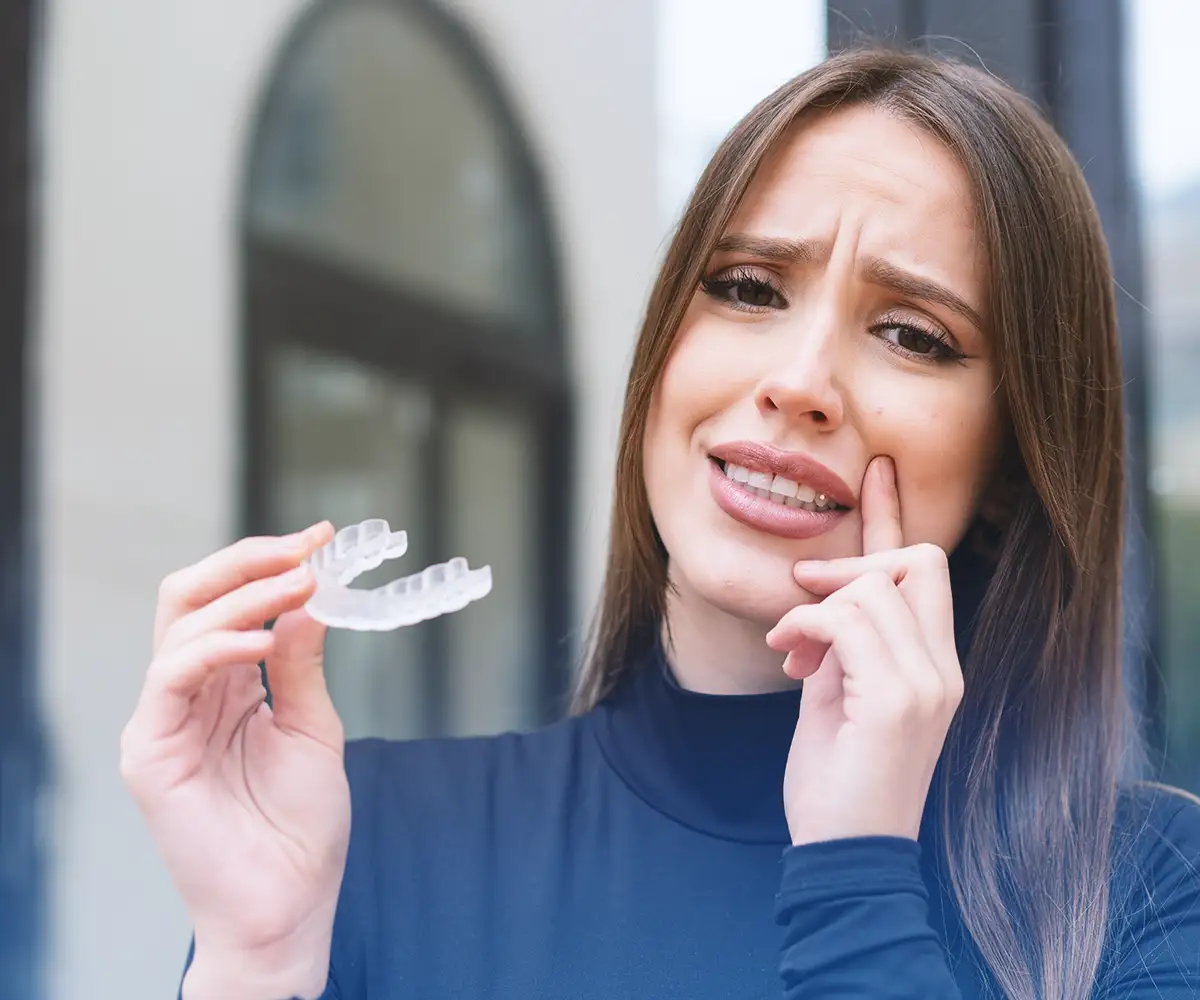
A soft night guard is also harder to adjust precisely, because the material gives instead of holding a fixed contact. A custom night guard can be reshaped in minutes when your dentist finds a spot carrying too much load. That difference matters more over years than it does in the first week.
If you are wondering can a night guard change your bite more readily when it is soft than when it is hard, the material is not really the deciding factor. Coverage is. A soft night guard that covers the whole arch is safer on this specific point than a rigid one that covers half of it.
Where Pharmacy Guards Fall Down
Boil and bite guards from a pharmacy sit at the awkward end of this. They are moulded by you rather than fitted to you, they often fail to seat fully on the back teeth, and they are the category where coverage problems are most likely. For an occasional sports fixture that is one thing. As the appliance you wear every night for two years it is a different proposition, and it is precisely why a night guard made for your mouth is fitted to a specific set of teeth rather than an average one. A properly made custom night guard costs more at the outset and removes most of the risk this article is about.
Is the Guard Treating What You Think It Is Treating
Two jobs get merged here and they deserve separating. Protecting teeth from the wear, chipping and cracking that come with teeth grinding is something a well made splint does dependably. Relieving jaw joint pain is a different claim, and the evidence for it is more modest and less certain than the advertising implies.
Bruxism Is a Behaviour, Not a Disease
It also helps to be precise about the words. Teeth grinding and clenching during sleep is called bruxism, and bruxism is a behaviour rather than a disease in itself. An occlusal splint does not switch that behaviour off. It puts a replaceable layer between your teeth so the forces land on acrylic instead of enamel, which is genuinely valuable and narrower than most people assume when the guard is handed over.
So if you were given an occlusal splint for jaw pain and the pain has not improved, the guard is not necessarily faulty and you are not imagining things. It may simply have been doing the job it is good at rather than the one you were hoping for. Bruxism has drivers an appliance cannot reach, and the NHS overview of teeth grinding is a sensible starting point for that wider picture, including the stress, sleep and medication factors involved.
Three Checks, and When to Go Back
Check One: Does It Cover Everything
Does the appliance give you full occlusal coverage, including the very back teeth? Run a finger or your tongue along it. If the last molar is uncovered, ask why before you wear it for another month.
Check Two: How Long the Odd Feeling Lasts
Does your bite return to normal within a few minutes of taking it out? If it does, you are in ordinary territory. If your teeth are still meeting differently by the afternoon, or your front teeth have stopped touching, that is not something to wait out.
Check Three: Even Loading
Does it feel evenly loaded? An occlusal splint that seesaws, or that concentrates pressure on one or two teeth, usually has a high spot. Adjusting that takes minutes and is a normal part of fitting a splint, not evidence that something has gone badly wrong.
What to Say at the Appointment
So, can a night guard change your bite? It can, but almost always through a mechanism you can see coming: partial coverage, a poor fit, or a device never made for your mouth. Tooth movement is comparatively easy to address in its first weeks and considerably harder once it has been quietly progressing for a year. Wear the guard the night before your appointment so the marks are fresh, take it with you, and say plainly what changed and when you first noticed it. That one sentence is usually enough for whoever examines you to find the answer quickly.