



What Happens If You Stop Wearing Your Retainer After Invisalign
28 October 2026
Whitening Before or After Composite Bonding: The Right Order
Sequence is one of those things nobody thinks about until it goes wrong, and whitening before composite bonding is the clearest example in cosmetic dentistry. Someone whitens their teeth, feels delighted for about six hours, then notices the front filling has turned into a dull yellow rectangle. Getting whitening before composite bonding in the correct order avoids that entire conversation.
The rule itself is simple. The reason behind it is what people tend to misunderstand.
Why Order Matters So Much
Natural enamel responds to peroxide based whitening agents. Composite resin does not, at all.
Bonding material can be cleaned and polished, and surface stains can be removed, but the underlying shade set on the day it was placed stays exactly where it is for the life of the restoration.
So if the teeth around it get lighter, the composite stays behind and the contrast becomes obvious.
The Practical Consequence
Skip whitening before composite bonding and you end up replacing perfectly good work within weeks. Whiten first and bond afterwards, and the shades match from the start.
That is the whole principle, and it applies to veneers, crowns and fillings just as much as to bonding.
The Correct Sequence, Step by Step
Step One: Cleaning and Assessment
A professional clean removes surface staining so the true underlying shade is visible. Whitening a tooth covered in plaque and tea stain gives a patchy, unpredictable result.
Any active decay or gum inflammation is treated before anything cosmetic begins.
Step Two: Whitening
Either in surgery or at home with custom trays, depending on sensitivity and how many shades are being targeted. Teeth whitening results vary between individuals, which is precisely why the final shade cannot be predicted in advance and the bonding has to wait.

Step Three: The Waiting Period
This is the step people skip, and it matters more than it sounds.
After whitening, the enamel surface holds residual oxygen which interferes with adhesive bonding. Studies have shown reduced bond strength when composite is placed immediately after a whitening session.
Most clinicians wait between ten and fourteen days. The shade also rebounds slightly during this time as the teeth rehydrate, so the colour you match to on day fourteen is the colour you actually keep.
Step Four: Shade Selection and Bonding
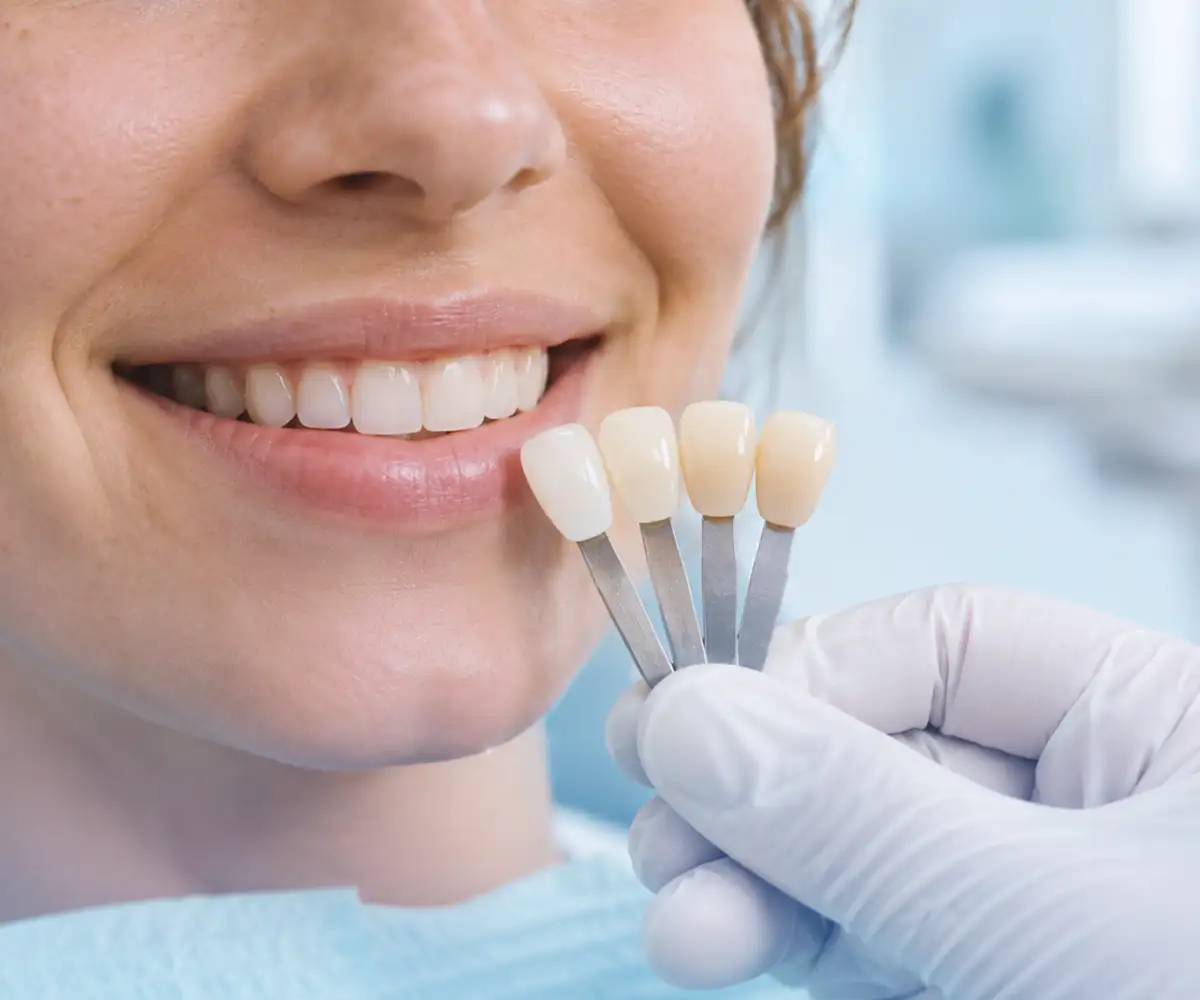
Composite bonding shade is chosen against the settled, stabilised tooth colour under good lighting, ideally natural daylight.
Wet teeth look darker than dry ones, so experienced dentists take the shade before isolating the tooth rather than after it has been drying under a clamp for twenty minutes.
What If the Bonding Is Already There?
This is the situation most people are actually in. Existing bonding, teeth that have darkened over the years, and a wish for something brighter.
The answer is unchanged: whiten first, then replace the bonding afterwards. Budget for the replacement rather than hoping it will blend.
Bonding stain removal can help in mild cases, since much of the discolouration on older composite sits on the surface rather than within the material. A polish with the right abrasive paste often lifts a surprising amount of it.
If the composite still looks dull after polishing, the colour change is internal and only replacement will fix it.

How Long Does Bonding Last?
Bonding lifespan in the front teeth typically runs between five and eight years, with published studies reporting survival rates around eighty five percent at five years for anterior composite restorations.
That is respectable, though it is shorter than porcelain, and it means most people will be replacing it at some point anyway. Timing that replacement after a whitening course is simply efficient.
Keeping It Looking Good
- Skip abrasive whitening toothpastes, which dull the surface texture over time
- Rinse with water after coffee, red wine and dark tea rather than brushing immediately
- Have the restorations polished at routine check ups
Composite chipping at the incisal edge is the other common issue, usually caused by nail biting, opening packets with the teeth or nighttime grinding. A night guard solves the last of these.
Touch Up Whitening After Bonding
Once bonding is in place, further whitening becomes complicated but not impossible. A whitening touch up will brighten the natural enamel and leave the composite unchanged, which can gradually recreate the mismatch.
For that reason, many dentists advise choosing a realistic target shade rather than the brightest possible one. A sustainable colour is easier to maintain for a decade than an extreme one.
Aliadent and other clinics planning cosmetic work usually record the agreed shade so any future repair can be matched precisely, which is genuinely useful years later.
Maintenance Whitening Schedules
Short top up sessions once or twice a year keep the natural teeth close to the original shade. This is far better than allowing a large drift and then attempting to correct it all at once.
Special Situations
Tetracycline and Deep Internal Staining
Deeply discoloured teeth respond slowly and unevenly to whitening. In these cases the plan often moves toward veneers, and the sequencing discussion changes completely.
Single Dark Tooth After Root Treatment
Internal whitening from inside the tooth is the usual approach here, and it must be completed and allowed to stabilise before any bonding is placed over the front surface.
Very Sensitive Teeth
Shade matching becomes harder when whitening has to be done slowly at low concentration over several weeks. It is worth the extra time, since rushing produces both discomfort and uneven results.
The Short Version
Clean, whiten, wait about two weeks, then bond. Skipping the waiting period weakens the bond and risks matching to a shade that is about to change.
Whitening before composite bonding is one of the few cosmetic dentistry rules with almost no exceptions, and following it turns a potential disappointment into a result that still looks right several years later.
One Last Practical Note
Take a photograph of your teeth in daylight before whitening begins. Comparing that image with the result two weeks later is far more reliable than memory, and it helps enormously when agreeing the final shade with your dentist.
Planning whitening and composite bonding?
Talk to the Aliadent team about the right order and a shade you can keep for years.