Dental Flap Operation Recovery Time: How Long Does It Take to Heal?
18 September 2025
Looking for the Best Dentist in Istanbul? Contact Aliadent!
13 October 2025
Know These 5 Point Before Broken Root Canal Tooth Removal
If you are reading these words, chances are you’ve already endured the frustrating and often stressful process of a cracked tooth that already underwent a root canal. It’s a fairly common condition, and the fix will often leave you with a crucial choice: to save the tooth or consider removal. Working with a cracked tooth root canal or a fractured tooth root canal is intimidating, and if your root canal tooth broke before crown placement, the urgency only increases.
We recognize it may be a concerning time. To undergo the procedure of a root canal, and then to find out that you have developed a complication like a fracture, can leave anyone disheartened. But breathe deeply. You’re not alone, and with the right information, you can make the best decision for your oral health.
This detailed reference is designed to walk you through the five key points that you simply need to be aware of before undergoing a broken root canal tooth extraction. We will cover the ‘why’ of breakage, diagnostic process, options, and what to happen and how during and after extraction. What we hope to do is provide you with information, expressed with sympathy and honesty, so you can sit in your dentist’s chair with confidence.
The Reality of the Cracked Root Canal Tooth

Okay, let’s address the elephant in the room: why does a tooth crack after all the work of a root canal? It is a valid question. The fact is, a tooth that has received a root canal is basically not the same as a living tooth.
When a tooth has a root canal, the pulp inside, the part with nerve supply and blood supply, is removed. While this frees the tooth and pain from infection, it also ensures the tooth is no longer being nourished by the internal blood supply. This, over the course of time, can make the dentin (the hard structure of the tooth) become more brittle. Additionally, the procedure itself must by necessity remove much of the tooth structure in an attempt to access the canals. This structural accommodation, in addition to the chewing forces, can subject the tooth to fracture if a permanent crown was not placed early after the treatment.
This fragility is why you might suddenly find yourself with a broken piece of tooth or notice a crack, leading you to ask, what happens if the root canal tooth breaks? In most situations, the crack usually goes deep, sometimes as far as the root, making a savable case turn out to be an issue of having to extract it.
Point 1: Understanding the Type and Severity of the Fracture
The very first, and perhaps most crucial, piece of information you need is an accurate diagnosis of the fracture. Not all breaks are the same. A small chip is very different from a vertical root fracture.
Your dentist will use a sequence of tools: a sharp vision examination, careful probing, and most importantly, X-rays or even a 3D Cone-Beam Computed Tomography (CBCT) scan. These imaging techniques are essentially necessary for determining the exact extent of the damage.
- Craze Lines: They are minor, surface level cracks that do not affect the layers beneath. They are usually harmless and do not need to be removed.
- Broken Cusps: This is when one of the biting surfaces (cusps) of the tooth breaks. If it cracks above the gum line and does not penetrate into the root, the tooth can be saved with a new filling and crown. This is the best case scenario if your root canal tooth broke before crown.
- Cracks: That Extend to the Gum Line: These are worse. If the crack extends all the way to the gum line, there’s a higher chance that it has hurt the root.
- Vertical Root Fractures (VRFs): This is the most challenging one. A VRF typically starts in the root and migrates upwards. These fractures are typically impossible to repair because they allow bacteria to seep continuously into the bone beneath the tooth, causing persistent infection and bone loss. If you have a vertical cracked tooth after root canal, extraction is often the only long term solution to preserve the surrounding bone and adjacent teeth.
Knowing the type of fracture dictates the entire treatment course. If the damage can’t be repaired, then it becomes more apparent the need to remove it and less worrisome.
Point 2: The Decision Point: Salvage or Extraction?
The time has come. You and your dentist have to weigh the likelihood of long term successful repair against the chances of attempting to save an unsalvageable tooth.
Arguments in Favor of Salvage (If It Is Possible)
Should the fracture be minor, affecting only the crown, or a crack to the superficial cusp, your dentist can suggest:
A new filling and crown: This is standard treatment for a fractured cusp.
Special repair: For some cracks, bonding agents or even an internal splint can be used, but these tend to be complicated and occasionally fail in the longer term.
The primary benefit of saving the tooth is to retain your natural bite and bone anatomy.
Reasons for Extraction (If Indicated)
The simple answer to when you should remove a broken root canal tooth is: when the fracture is irreparable and poses a threat to your overall oral health.
You must extract the tooth when:
The fracture is deep within the root: As talked about with VRFs, deep fractures cannot successfully be sealed, leading to chronic infection.
Severe bone loss: Ongoing infection around the broken root will resorb the supporting bone of the tooth. Removal of the infection source must be done to stop this from progressing.
Ongoing pain and swelling: This indicates an uncontrolled, untreated infection.
An effort to salvage a tooth with an unfavorable prognosis is most often a service to the patient. It creates multiple, expensive, and ultimately unsuccessful procedures, prolonged suffering, and further bone loss making subsequent replacement difficult.
Point 3: Preparing for the Gap: Your Replacement Options
The removal of the fractured root canal tooth is not the solution; it’s the beginning of a different path. Before you get the tooth removed, you just need to know what will fill the void that is left. Failure to fill the space will cause a whole lot of problems, ranging from adjacent teeth shifting, opposing teeth coming in too high, and bone loss in the extraction site.
Your main alternatives to replacement are:
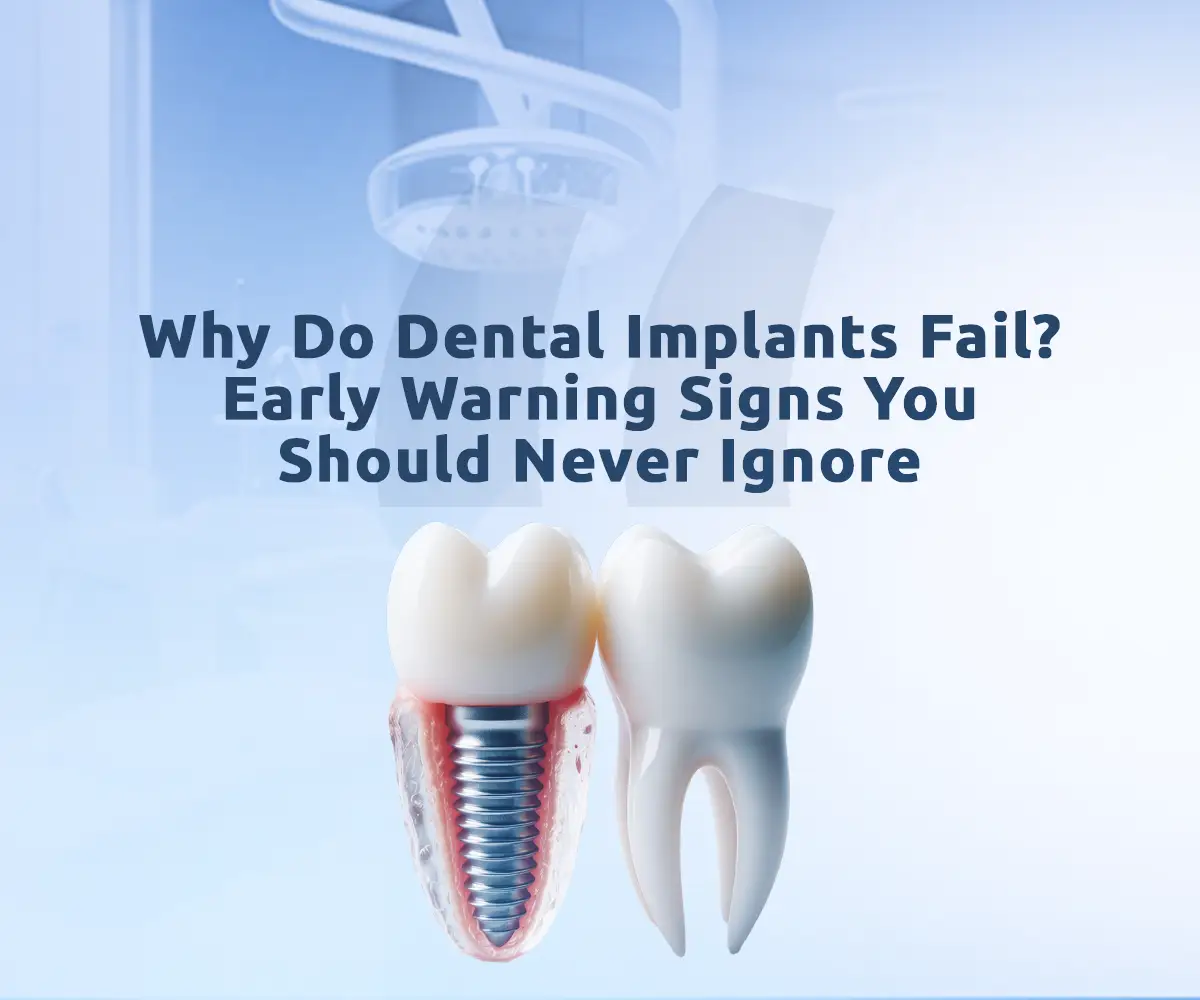
- Dental Implant: The gold standard by and large. An implant is a surgically placed titanium post in the jawbone that acts as a new root. Over this, a crown is placed. Implants are very stable, feel like a natural tooth, and best of all, stimulate the jawbone, not resulting in bone loss.
- Fixed Bridge: This is placing a crown on the teeth adjacent to the space. These two crowns are connected to an artificial tooth (pontic) that sits in space. The major drawback is that it requires altering (shaving down) two good teeth.
- Removable Partial Denture (Flipper): This is the most conservative and least costly short term solution. It’s a removable prosthetic that contains a tooth mounted on a gum colored plastic base. It’s frequently used as a temporary replacement until an implant is healed.
It’s also important to discuss when these replacements occur. For instance, in a few situations an implant can actually be replaced immediately after the extraction (immediate placement), while other situations include waiting for healing or even a bone graft before the implant procedure can be done. Having this scheduled in advance ensures the entire process is simpler and less stressful.
Point 4: The Importance of a Specialist and Potential Bone Grafting
Even though your general dentist can manage a simple extraction, a cracked root canal tooth, especially one with a severely impacted or broken root, is apt to be fraught with problems. These types of extractions would typically be referred out to an Oral and Maxillofacial Surgeon or a Periodontist.
Experts have training and equipment, such as sophisticated surgery techniques and specialized light sources, to perform a more accurate and less traumatic removal. A less traumatic removal is necessary because it preserves the healthier adjacent gum tissue and bone structure, which is important to the success of future implants.
Handling Bone Loss
Since a badly cracked or chronically infected tooth causes the surrounding bone to retract, a key pre-removal procedure is typically socket preservation or bone grafting.
When a tooth is removed, the jawbone naturally recedes. To allow for preservation of bone width and height for an implant, your surgeon can graft the socket with bone grafting material during the time of removal. The material is a scaffold that prompts your body to grow new, healthy bones.
Don’t miss this conversation. Implant planning, learning about bone grafting is essential because the success of the implant relies on the success of achieving good, healthy bone density.
Point 5: The Healing and Long Term Maintenance

The extraction of a broken root canal tooth is really a surgical procedure, and proper post-op care is not a possibility for speedy and trouble free recuperation.
Post Extraction Instructions
Your surgeon or dentist will give you some specific instructions, but the main details are:
Control Bleeding: Bite gently on the gauze pad for the period advised.
Manage Pain and Swelling: Take directions in taking prescribed or over the counter pain medication. Use ice packs on the outside of your face within the first 24 hours.
Prevent Dry Socket: This is the most common and sore one. DO NOT spit forcefully, drink through a straw, or rinse forcibly for the initial 48 hours. These actions will disturb the essential blood clot forming within the socket.
Diet: Eat soft foods and cold drinks for the first few days.
Oral Hygiene: Gently brush the remainder of your mouth, not where extraction occurred. You will likely be told to start salt water rinses after 24 hours.
When healing occurs at the site, you will then go to your chosen restoration (implant, bridge, etc.). Remember, while dealing with a cracked tooth after root canal is maddening, you are moving toward a healthier, more stable oral foundation.
A Comment on Dental Tourism and Root Canal Treatment
Sometimes, in the face of outrageous costs for complex work, patients opt for dental tourism. It is to be noted here that countries like Turkey have become top destinations for dental care, even for advanced procedures. If you are exploring this, perhaps considering root canal treatment in Turkey or related extractions and implants, it is vital to perform exhaustive research. The clinic has to be very established, the doctors sufficiently skilled, and you should have a good follow up scheme once you are back home. Although it is cost efficient, complex conditions such as a broken tooth with a root canal require the utmost level of care and the facility should be very accessible in case of complications.
The Next Steps
The treatment of a fractured tooth root canal is always a complicated process, but with the knowledge of the following five issues, the degree of the break, the actual prognosis, your different options for replacing the tooth, the necessity of a specialist and the process of and need for bone grafting, plus your recovery steps, you are well-equipped to make an informed and confident choice.
The general health of your mouth influences your overall physical health. Do not let fear or anxiety be the restrictive factor. Be open with your dental care providers, ask all the questions you need, and commit to the decision that guarantees a healthy, firm, and beautiful smile for life.