
Gum Contouring Before Veneers: When It Is Actually Needed
19 September 2026
Dry Socket After Wisdom Tooth Removal: The Early Signs
20 October 2026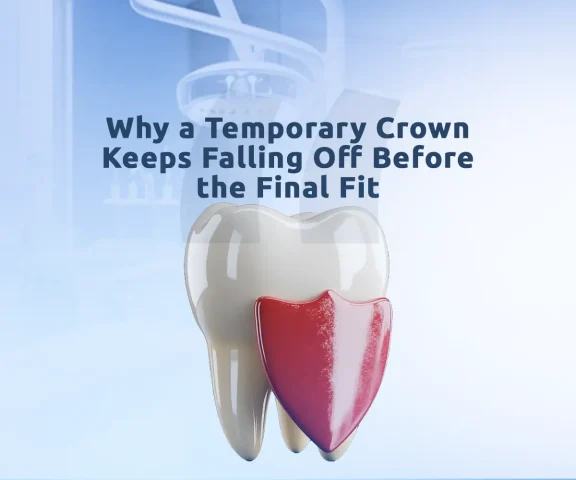
Why a Temporary Crown Keeps Falling Off Before the Final Fit
There is a very particular kind of panic that happens when something small and hard lands on your tongue in the middle of dinner. You already know what it is before you look. A temporary crown keeps falling off for reasons that are almost always fixable, and almost never a sign that the treatment has failed.
Still, it is annoying. It happens at the worst possible moment, usually on a weekend, and it makes people worry that the whole crown plan is going wrong.
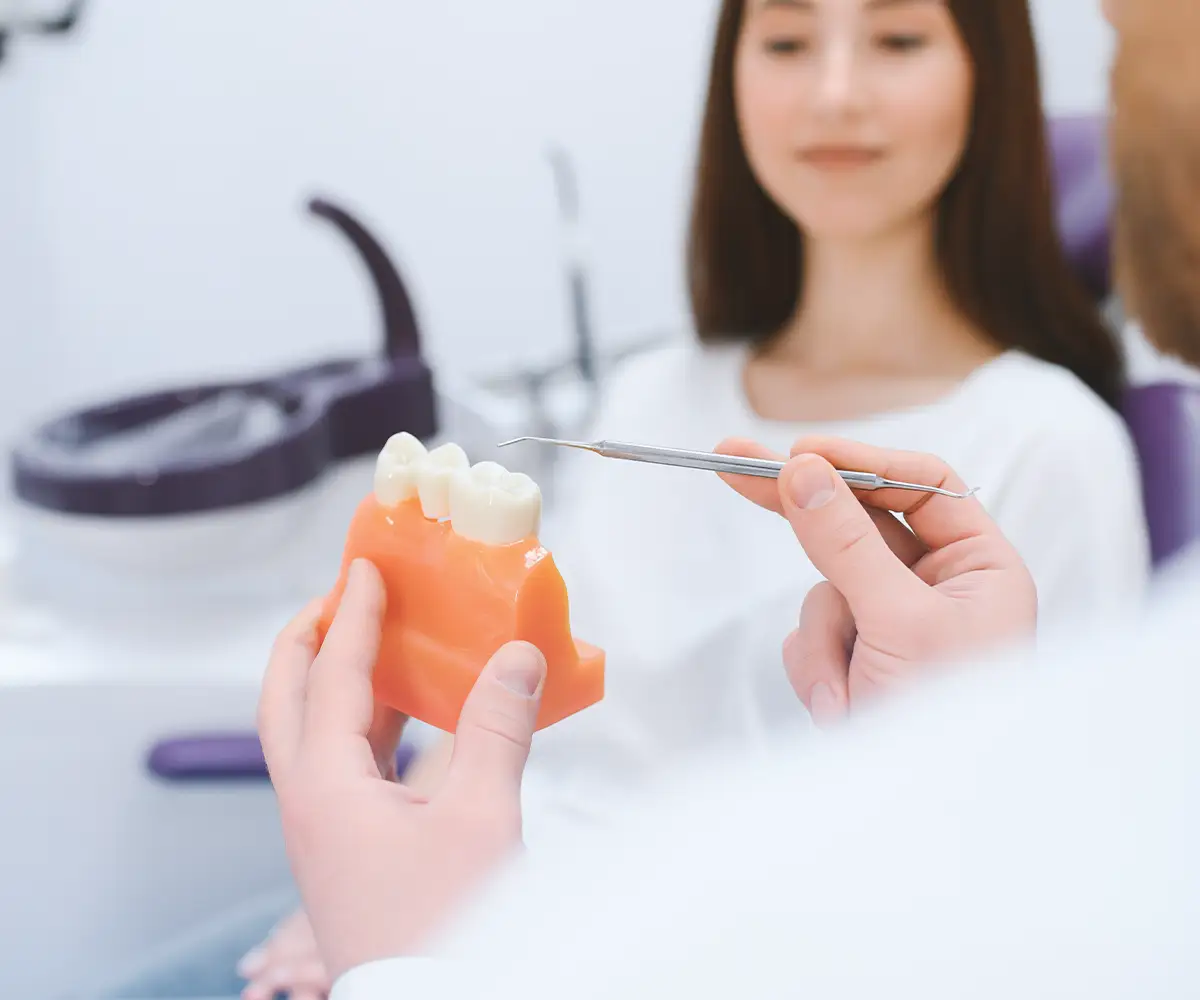
What a Temporary Crown Is Actually For
The temporary is not a cheap version of the final crown. It is a placeholder with three specific jobs.
It protects the prepared tooth from temperature and bacteria, it keeps the neighbouring teeth from drifting into the space, and it shapes the gum so the permanent crown sits neatly against healthy tissue.
Why It Is Designed to Come Off
This part surprises people. The material used to hold it in place is deliberately weak, because the dentist has to remove it cleanly at the next appointment without damaging the tooth underneath.
Temporary dental cement is meant to release under moderate force. Strong permanent cement would make removal difficult and could fracture the underlying structure during the process.
The Most Common Reasons It Comes Loose
Once you know the usual culprits, the pattern becomes fairly obvious.
Sticky and Chewy Food
Toffee, chewing gum, crusty bread and caramel are the classic offenders. These foods grip the crown and pull upward, which is the exact direction the cement is weakest against.
Chewing with a temporary crown works best when the opposite side of the mouth does most of the work. It feels inconvenient for two weeks, but it saves several emergency appointments.
Very Little Remaining Tooth
If the tooth was heavily broken down or root treated, there may not be much height left for the crown to grip. Retention comes from surface area, and when that surface is short, the temporary struggles.
In these cases a post or a core build up is usually planned, and the final crown will hold far better than the temporary ever did.
Grinding and Clenching
Night grinding applies forces that no temporary material was designed to handle. Patients who wake up with a tight jaw often lose their temporaries repeatedly, and a protective guard can solve it.
Moisture During Cementation
Saliva contamination at the moment of cementation weakens the bond significantly. This is not a blame issue, some teeth sit in awkward positions where isolation is genuinely difficult.
What To Do When It Falls Off
When a temporary crown keeps falling off, the first rule is simple: keep it. Do not throw it away, even if it looks chipped.
Rinse it gently, dry it and place it in a small container. Then call the clinic. Most practices will fit you in quickly because recementing takes only a few minutes.
Crown fell off what to do searches usually end with someone reaching for household glue, and that is the one thing worth avoiding completely. Superglue is toxic in the mouth, sets permanently and can make proper removal impossible later.
Pharmacy temporary cement kits are an acceptable short term option if you are travelling. Clean the inside, apply a thin layer and seat it with gentle pressure.
If You Cannot Reattach It
Leaving the tooth uncovered for a few days is not a disaster, but it is uncomfortable. The prepared surface is dentine, which reacts sharply to cold air and sweet food.
Sensitivity under temporary crown situations become much worse once the covering is gone. Avoid very hot and very cold drinks, brush gently, and get it recemented as soon as possible.
Looking After It Properly
Temporary crown care comes down to a handful of habits that take almost no effort.
- Floss by pulling the thread out sideways rather than upward
- Keep sticky and very hard foods off the plate for now
- Chew on the opposite side whenever you remember
That sideways flossing tip is the single most useful piece of advice in this entire article, and the one patients are almost never told.
Sensitivity Is Normal, Pain Is Not
Mild cold sensitivity through a temporary is expected. Sharp pain when biting, throbbing at night or a bad taste around the gum are different, and they need a proper look.
How the Permanent Crown Differs
Permanent crown fitting uses a completely different material and a completely different cement. Modern crowns are bonded or cemented with materials that develop serious strength, which is why the final restoration behaves nothing like the temporary.
Clinical follow up studies place the ten year survival rate of well made ceramic crowns at roughly ninety percent. So a temporary that fell off twice tells you almost nothing about how the final one will perform.
Why Preparation Matters
Crown preparation design determines retention more than any cement ever could. Adequate height, a slight taper and a clean margin are what hold a crown in place for years.
When those elements are missing, the dentist may recommend crown lengthening or a build up before continuing. It adds a step, but it prevents the same problem repeating with the permanent crown.
How Long Should You Wait Between Appointments?
Two to three weeks is the usual gap while the laboratory produces the final restoration. Clinics with digital scanners and in house milling can reduce this considerably, sometimes to a single day.
Aliadent and other clinics working with digital workflows often shorten this waiting period, which reduces the number of things that can go wrong in between.
Leaving a temporary in place for months is where real trouble begins. The cement washes out gradually, decay can start underneath and the gum can grow over the margin.
The Reassuring Part
A temporary coming loose is inconvenient rather than serious. It does not mean the tooth is failing, the dentist made a mistake or the plan needs changing.
Keep the piece, avoid glue, call the clinic and adjust your chewing for a couple of weeks. When a temporary crown keeps falling off more than twice, mention it clearly at the next visit so the underlying reason can be addressed before the final crown goes in.