Why Do I See a Grey/Black Line Around My Old Crowns
20 February 2026
How to Overcome Your Fear of the Dentist
16 March 2026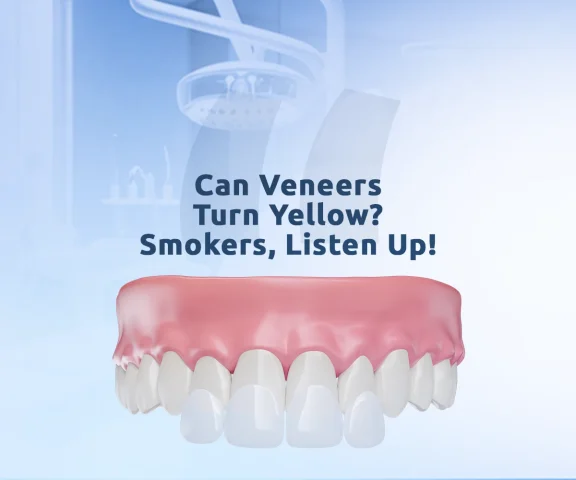
Can Veneers Turn Yellow? Smokers, Listen Up!
For those who have invested in a smile makeover or are dreaming about one, a terrifying question lurks in the back of the mind: can veneers turn yellow just like natural teeth do? Imagine this scene: It is a beautiful morning, the sun is shining, and there is a steaming cup of coffee on the table. For many, this moment isn’t complete without a cigarette. It is a ritual, a moment of peace before the chaos of the day begins. But then, a glance in the mirror changes the mood. The smile looking back isn’t as bright as the morning sun. It looks tired, a bit dull, and undeniably yellowish. This is the heavy price of that daily ritual. Nobody wants to spend a fortune on a Hollywood smile only to watch it fade into a shade of beige tobacco stain.
The relationship between smoking and dental aesthetics is complicated. It is like a love hate story where the smoke loves to cling to the teeth, but the teeth hate the smoke. However, technology in dentistry has come a long way, and the answer isn’t a simple yes or no. It depends heavily on choices made at the beginning of the journey. So, let’s dive deep into this smoky topic and clear the air.
The Great Divide: Porcelain vs. Composite

To understand why a smile might change color, one must first understand what that smile is made of. Not all veneers are born equal. In the world of cosmetic dentistry, there is a massive battle of materials: composite bonding vs porcelain veneers smoking habits. This is where the destiny of a smile is usually decided.
Think of composite resin as a very high tech plastic. It is beautiful, it is moldable, and it is more affordable. However, structurally, it is somewhat like a microscopic sponge. It has tiny, invisible pores. When smoke, which is heavy with tar and nicotine, swirls around the mouth, it looks for places to settle. Composite materials, unfortunately, welcome these stains with open arms. So, if the question is can veneers turn yellow when they are made of composite, the answer is a heartbreaking yes. Over time, they will absorb the pigments from cigarettes, coffee, and red wine, losing that initial sparkle.
On the other side of the ring, we have porcelain. Porcelain is the glass knight in shining armor. It is fired in an oven at incredibly high temperatures, creating a surface that is completely glazed and non porous. It is like a dinner plate; you can pour coffee on it, leave it there, wipe it off, and it is still white. When we look at composite bonding vs porcelain veneers smoking effects, porcelain is the clear winner for anyone who intends to keep lighting up. It simply refuses to hold onto the stain in the way composite does.
The Porcelain Shield: Do They Really Stay White?
So, does this mean porcelain is magic? Well, almost. Patients often ask, “do porcelain veneers stain from smoking at all?” Theoretically, the porcelain itself is incredibly resistant. It is one of the most stain resistant teeth veneers materials available on the planet. A heavy smoker could puff away for ten years, and the porcelain surface would likely remain as white as the day it was cemented.
However, life is rarely perfect. While the answer to “do porcelain veneers stain from smoking?” is generally “no” regarding the material itself, there is a catch. The vulnerability lies in the edges. Where the veneer meets the natural tooth structure, there is a microscopic margin. If this margin isn’t perfectly sealed or if gum recession occurs due to smoking (which is very common), tar can accumulate on the bonding cement or the exposed natural tooth root. This creates a brown outline around that beautiful white tooth. So, while the veneer stays white, the overall look can still be compromised. It is a reminder that can veneers turn yellow is not just about the material, but about the whole environment of the mouth.

The Tragedy of Composite and Whitening
Let’s go back to the composite scenario for a moment because it is a common trap. Many people choose composite bonding because it is quicker and cheaper. But after a year or two of smoking, they notice the dullness setting in. Panic sets in. They run to the store or the dentist and ask, “can composite veneers be whitened?”
Here is the hard truth that hurts: No. Unlike natural tooth enamel, which has pores that can be opened and cleaned out with bleaching agents, composite resin does not react to whitening gels. If you bleach yellowed composite veneers, the natural teeth behind them might get whiter, but the veneers will stay the same yellow shade, making them look even worse by contrast. The question “can composite veneers be whitened?” usually ends with a disappointing conversation about having to replace the entire set of veneers. This is why, for smokers, composite is often considered a temporary solution rather than a forever smile. If you are asking can veneers turn yellow and you have composites, you are essentially watching a slow motion movie where the ending is already known.
Living the Smoker’s Life with Veneers
Living with veneers while continuing to smoke is a high maintenance lifestyle. Smoking with veneers requires a level of hygiene that borders on obsession. The smoke doesn’t just stain; it creates a sticky film called plaque that hardens into tartar much faster than usual. This tartar loves to hide between the teeth and along the gumline.
When smoking with veneers, the biggest enemy isn’t actually the color; it is the health of the gums. Smoking constricts blood flow, making gums more prone to disease and recession. If the gums pull back, the edges of the veneers show. And as we mentioned, those edges are the weak spots. Suddenly, the question changes from can veneers turn yellow to “why do my teeth look long and outlined in brown?” It is a domino effect. At Aliadent, the focus is always on informing the patient about these risks before the treatment begins, ensuring they know that smoking with veneers is a commitment to aggressive cleaning.
The Survival Guide: Maintenance Tips
Okay, let’s say quitting isn’t an option right now. We are humans, not robots, and habits are hard to break. So, how to keep veneers white while smoking? Is there a secret trick? While nothing beats quitting, there are ways to mitigate the disaster.
First, professional cleaning is non negotiable. It is not a luxury; it is a necessity. Professional polishing pastes can remove superficial surface stains that settle on the veneers before they have a chance to harden. For those asking can veneers turn yellow if I clean them enough? The answer is: they will turn yellow slower.
Secondly, the tools used at home matter immensely. Using a hard bristled toothbrush is a crime against veneers. It creates micro scratches on the surface. These scratches act like little traps for tobacco tar. Instead, the focus should be on the best toothpaste for veneers and smokers. This shouldn’t be a harsh, gritty “smokers’ toothpaste” found in the supermarket. Those are sandpaper in a tube! They will scratch the porcelain or composite, making it dull and more prone to staining. The best toothpaste for veneers and smokers is actually a non abrasive, gentle gel that cleans without scratching. It might seem counterintuitive, but gentle is better.
Another trick on how to keep veneers white while smoking is rinsing with water immediately after every cigarette. It sounds tedious, but washing away the loose chemicals before they bond to the surface makes a huge difference.

The Glue Factor
There is another hidden actor in this play: the luting cement (the glue). Even if you choose the most expensive, stain resistant teeth veneers made of high grade porcelain, the glue holding them in place can sometimes be the traitor. Older types of cement were more prone to discoloration. If the edges of the veneer aren’t perfectly flush with the tooth, the smoke hits that line of glue. Over years, this can create a yellow halo. This is why the skill of the dentist is just as important as the material chosen. If people wonder can veneers turn yellow because of the glue, yes, it is possible if the bonding technique wasn’t flawless.
Making the Right Choice
It is a significant investment, both financially and emotionally. Standing in front of the mirror, looking at a smile that boosts confidence, is a feeling everyone deserves. But for smokers, this journey has more bumps in the road. The anxiety about can veneers turn yellow is real and justified, especially if the wrong material is chosen.
If nicotine is part of the daily routine, composite resin is likely to lead to heartbreak. It just can’t win the fight against tar. Composite bonding vs porcelain veneers smoking is a battle where composite surrenders early. Porcelain, however, stands strong. It offers that peace of mind where one doesn’t have to check the mirror frantically after every coffee break. It remains the gold standard for stain resistant teeth veneers.
So, let’s look at the bottom line. Can veneers turn yellow? If they are composite, absolutely. If they are porcelain, they are incredibly resistant, but the teeth and gums around them are still vulnerable. The dream of a white smile isn’t impossible for smokers, but it requires smart choices. It requires choosing porcelain over composite. It requires finding the best toothpaste for veneers and smokers and using it religiously. And it requires accepting that smoking with veneers means visiting the hygienist more often than the average person.
The fear of can veneers turn yellow shouldn’t stop anyone from getting the smile they want. It should just make them more careful about how they get it. A beautiful smile is a powerful thing; it changes how the world reacts to us. With the right care and the right materials from experts like Aliadent, that smile can shine bright, even through the smoke.